Day 4 of our Trip
(If you like the blog post, kindly place your comments in the comment section of the post. You can also follow the blog to get notification of new posts)
We had reached Mara Sopa Lodge yesterday and enjoyed our evening with Masai Dance. Today was the day of a “whole day Safari” including seeing the famous migration of Wilder Beasts, Zebras and Giraffes (if at all it happens as it entirely depends on the mood of the animals to migrate or not to migrate). The Masai Mara National Park Opens for people at 0630. We had planned to have a quick breakfast and start the safari at 0730.
Being an ex Fauji (ex Military Man) always helps. I think I can be a Good Tour Manager. Our group was out on the road at 0740. A good time with respect to our schedule. In a short time, we reached the Gate and encountered a first and only problem in the whole trip. The security persons wanted our id document (namely Passport) and we were not carrying them (nor did our guide warn us to carry them). However, the Forest staff let us go after verifying our stay details from Sopa Mara Lodge.
As we moved into the forest, the usual sightings started. The Zebras were there, the Impalas were there and so were Giraffes, etc. Flat grassland made it possible to view these animals from up and close. The morning sun rays made the coat of all the animals shine and they were looking magnificent.
 |
| Tomson's Gazal, also feel the flat grassland of Masai Mara (Copyright - Harshad Datar, 2018) |
 |
| Wilder Beast (Copyright - Harshad Datar, 2018) |
 |
| Lapwing (Copyright - Harshad Datar, 2018) |
 |
| Heard of Wilder Beasts (Image - Harshad Datar, 2018) |
 |
| Zebra in its full glory, Africans call it "Donkey with the Strips" (Copyright - Harshad Datar, 2018) |
 |
| Male Impalas, thrown out of the herd by dominant male (Copyright - Harshad Datar, 2018) |
 |
| Where is my Food? A Giraffe looking for food (Copyright - Harshad Datar, 2018) |
 |
| Ground Hornbill (Copyright - Harshad Datar, 2018) |
When one is in a National Forest, the aim is to enjoy the nature and the wildlife that is encountered. Every one desires to see the Big Cat (Tigers) in India and Big Five in Africa (out of which Leopard, being a shy animal, is difficult to sight and Lions are few as compared to big herds of animals like Impalas, Zebras) but that desire needs to be curbed else one is left chasing the big cats or big five and miss the pristine forest and grand wildlife in chasing the illusion.
After venturing little more inside we met our first predator (of Masai Mara), a Cheetah, merrily resting under a tree, oblivious to all the tourist vehicles and camera noise being generated. He looked majestic and cute. See for yourself.
 |
| "Parde me Rehene Do" (Let me be behind a curtain), a Cheetah (Copyright - Harshad Datar, 2018) |
 |
| Let me Rest, you go your way (Copyright - Harshad Datar, 2018) |
 |
| WHo is There!!!!! (Copyright - Harshad Datar, 2018) |
As we moved further we met a flock of Ibis, a herd of African Water Buffalo and an antelope family animal called “Topi”, yes you heard it right, Topi.
 |
| African Water Buffalos (Copyright - Harshad Datar, 2018) |
 |
| Topi (Copyright - Harshad Datar, 2018) |
Venturing further into Masai Mara Reserve we found something light brown on top of a rock.
 |
| From a distance, they were a small mass of Brown, this is up and close first image (Copyright - Harshad Datar, 2018) |
On getting a little closer, we realised we have hit a jackpot, a Pride of Lions were enjoying siesta (maybe, after a great meal). There were about 7 to 8 adult lionesses there, most sleeping and one grand Lioness seemed to be on security duty (difficult for me to shake off my defence background). Our and many other camera shutters started rolling and it felt that we be there for a long time and capture the mood.
 |
| Beauty on Duty (Copyright - Harshad Datar, 2018) |
 |
| Grand and Proud (Copyright - Harshad Datar, 2018) |
 |
| Scanning for Trouble (Copyright - Harshad Datar, 2018) |
 |
| Behave yourself Girls (Copyright - Harshad Datar, 2018) |
A Lion Pride is composed of a Male Lion and many Lionesses and few cubs. We took one round of this rock formation looking for that Big Lion but did not find one. Lions by nature are lazy, we knew (actually, Eric, the Guide knew) that we can safely move out and come back after some time and the Lionesses would still be there and maybe the Lion too will appear. We decided to look for other beauties of the Jungle (other animals).
 |
| Common Drongo (Copyright - Harshad Datar, 2018) |
Lo and behold, soon we found a herd of Elephants. Actually, we found a small elephant first and soon realised that there is a full herd of them.
 |
| Cute Baby (Copyright - Harshad Datar, 2018) |
When we returned to that rock, we found the Lionesses very much there and soon we also found the Lion of the pride with a cub trying to play with him. That cub was promptly scolded by the Lion.
 |
| I am the King (Copyright - Harshad Datar, 2018) |
 |
| It's Too Hot |
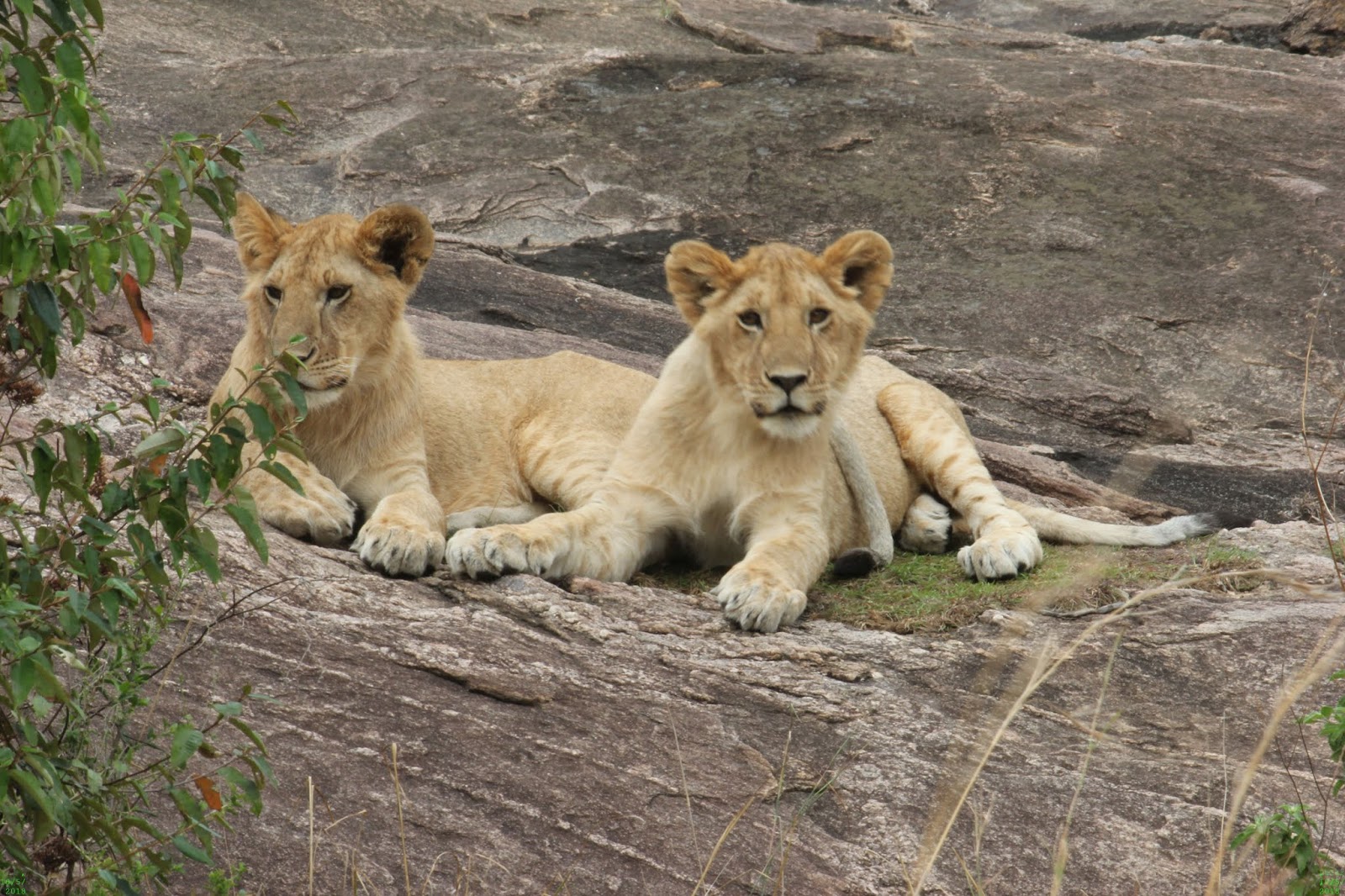
Poor cubs made an innocent face and sat, see how innocent they look.
 |
| I did not do anything |
After some modelling for photos, the Lion got up. Walked on top of the rock and drank some water and went to another place to rest. It is impossible to get a resting Lion moving. He is King of the Jungle and a king moves only when he wants (in this case that desire comes only when he is hungry).
 |
| Too many people, let me find a new place |
 |
| Wow, What a Refreshing Drink |
 |
| Grand and Majestic |
One interesting fact is, all safari vehicles have wireless sets installed and they exchange the sighting information. We also received input about sighting a Leopard on a tree. The place was far. A drive of over 40 minutes took us there. The Leopard was there, sitting on a tree branch but his face was on the other side. It was not possible to go on the other side of that tree. All we got was side view (minus his face and head) but none the less, a Leopard, very shy and difficult to sight animal was sighted by us (those who reached after half an hour could see Leopard walking away).
 |
| Get me if you can |
We moved on from there and continued meeting some more animals.
After some time we decided to have our Picnic basket (packed lunch is called Picnic basket by hotels and resorts). As we were sitting down for our lunch under an umbrella Acacia tree Eric got the news of possible migration. We rushed to the spot and waited for a long time (while having our lunch in our safari car).
There were many wilder beast and zebras gathered on both side of the river and they did inch towards the river but their mood possibly changed and they moved away from the banks of Mara. Few Crocodiles missed their Lunch and we missed sighting the famous migration.
It must be understood that they migrate across the Mara river (animals do not have a notion of a boundary between nations like we have) and surprisingly migration happens from both banks across the river to the other bank, they may be thinking that the grass on the other side is greener and thus switching sides. It is just coincidental that at some places where Mara River forms the boundary between Kenya and Tanzania when these animals migrate, they do migrate from Tanzania to Kenya and vice versa.
All this while some Giraffes were merrily grazing and ambling on the river bank.
 |
| Aao Gale Lag Jaye, Two Giraffe (Copyright - Harshad Datar, 2018) |
It was almost 1400 hrs. we decided to return back as we were deep inside Masai Mara National Park. While driving along the bank of Mara we saw Crocodiles and Hippopotamus sunbathing on the sandbank of the river.

 |
| Crocodile (Copyright - Harshad Datar, 2018) |
 |
| Hippopotamus (Copyright - Harshad Datar, 2018) |
As we continued our return journey, at a small stream we witnessed mini-migration of wilder beasts across this stream.
 |
| Mini Migration (Copyright - Harshad Datar, 2018) |
 |
| Wilder Beasts Having their fill, Great Grey Heron in the foreground (Copyright - Harshad Datar, 2018) |
We kept meeting our non-predatory friends on our way back. We made it back to Mara Sopa at about 1630 after a very fruitful albeit tiring day into the Masai Mara National Park.
 |
| White Backed Vulture (Copyright - Harshad Datar, 2018) |
 |
| Rhino (Copyright - Harshad Datar, 2018) |
 |
| Heard of Elephant (Copyright - Harshad Datar, 2018) |
 |
| SIlver Back Jackal (Copyright - Harshad Datar, 2018) |
One safari into Masai Mara was not enough. For us, it was “Yeh Dil Mange More” (Our heart craves for More (of wildlife)). We planned our half – day safari for the next day with Eric and then did usual things of tea, rest dinner and sleep sequence.