Showing posts with label Pune. Show all posts

Friday, April 10, 2026

A Marvel of Construction and Stone Carvings, Shri Kopeshwar Temple, Koppam ( Khidrapur) Dist Kolhapur

Introduction.

Khidrapur is a village where the river Krishna flows on three sides, and only one side is open for access to and from the outside world. Khidrapur is 60 km from Kolhapur, 39 km from Sangli, and about 280 km from Pune. Access to Khidrapur from both Sangali and Kolhapur is via various Maharashtra state highways that crisscross the area. 

It is technically a nondescript village like many other villages in the area. What sets this place apart is the Kopeshwar Temple.

So what makes the Kopeshwar Temple so special that it gives Khidrapur fame? Let us find out through this blog.

Shri Kopeshwar Temple, Koppam (Khidrapur)

The first and foremost speciality of Shri Kopeshwar temple is the presence of a Shiv Linga and a Vishnu Linga in its Garbha Gruha or the Sanctum Sanctorum. There may be a few temples that have both Siva and Vishnu present in the same Sanctum Sanctorum.

The Construction. 

The construction of the Shri Kopeshwar temple in Khidrapur started around 700 CE. As this place kept changing hands from one king to another, it is difficult to pinpoint who actually built this temple. Still, the finality came from the Shilahara dynasty king Gandaraditya in 1178 CE.

Made from black basalt rocks from the Sahyadri Hills, which are at least 70 to 100 km away from Khidrapur, the construction material was transported to this place by itself, a technological wonder of the time when transportation means were Limited. It appears that the stones were mined in the Sahyadri Hills and transported to this location using bamboo crafts through various rivers, including the Krishna River, which flows right next to it. In fact, many believe that this Temple is in the riverbed itself. 

Long Shot, the Temple (Courtesy Shrihari Koli)

The Temple. 

Let us now visit this Temple, which is full of intricate carvings of gods, goddesses, and various animals, birds, and flowers. As we enter the temple premises through one of the entrance Gates of its Bastian-like outer periphery, the visitors immediately realise that this Temple is built in a depression and there are high grounds around this Temple where Khidrapur village is located in all four directions. Unlike many other Hindu temples where a raised platform is used to further construct the main temple, this Temple rises from the ground, and that seems to be a reason that this Temple did not suffer much damage due to earthquakes, which are a common occurrence in this belt. 

The base of this Temple is made up of an elephant layer, consisting of various elephant statues made out of solid rocks on the three sides of this Temple, and the beauty is that no two elephants are the same. Unfortunately, various invaders following different religions other than Hinduism have broken most of the elephant statues, and many other statues inside this Temple have been defaced. On these three sides where elephant statues make a series around the temple, there is one different thing, that thing is, in the centre of these three sides, one can see Lord Shiva riding his Nandi. Even these statues are broken.

 Right above the elephant layer is the human layer. While it is called the human layer, the statues in this layer are a mix of Gods, goddesses, various female forms like dancers, etc., and male forms, including a Chinese and an African man. 

One of the Elephants of the Elephant Base of the temple (Courtesy Shrihari Koli)

The main Shiva temple stands on these two layers. There are four major parts of this Temple, which served different purposes in that glorious era of this Temple. 

Swarg Mandap.  

The first structure or part that a visitor comes across is the Swarg Mandap. The speciality of this Swarga Mandap is the 48 stone pillars that support its roof. The Swarga Mandap has a direct circular opening to the sky. This Temple has various spiritual significances, and this circular opening of the Swarg mandap to the sky is part of this spiritual thinking. This opening represents human beings' direct connection to the sky, and thus to heaven.


The Swarg Mandap, Side view (Courtesy Shrihari Koli)

Two natural phenomena are associated with this opening in the roof of the Swarg Mandap. First is Kirnottsav or Utasav of Rays. This happens in the first week of May when the sun rays fall directly on the Shiv and Vishnu Lingas. The second one is on Tripurari Purnima, when the moon perfectly lines up right on top of the circular roof, right in the centre of this opening.    

Swarga Mandap Opening, a perfect circle (Courtesy Shrihari Koli)


Kirnottsav, View from the Garbha Gruha (Courtesy Shrihari Koli)

Kirnottsav, Sun Rays illuminating both the Lingas (Courtesy Shrihari Koli)

Moon right in the center of the Swarga Mandap Opening (Courtesy Shrihari Koli)
 
Deepottsav, Khidrapur (Courtesy Shrihari Koli)

This Temple also celebrates Deepotsav on this day, when thousands of lamps are lit in the campus. 

It seems that Swargamanda served as a place for artist singers and dancers to perform in the service of Shri Kopeshwar Mahadev. 

Sabha Mandap.

This is the second part or structure that we see in this Temple. This structure is supported by 60 well-carved black basalt stone columns. The main columns of this Mandap have Kirtmukh carved on them. Kirtimukh was a demon with a boon to have his face carved on every Shiva temple entrance, and his never-ending hunger was to be satisfied by eating the sins of every devotee who crossed Kirtimukh at the entrance to enter the Sanctum Sanctorum. Interestingly, no two faces of Kirtimukh carved on these columns have the same decoration.

The Sabha Mandap also has a central raised platform with a circular stone on it. The circular stone in both the Sabha Mandap and Swarg Mandap seems to be meant as a stage for the performance taking place in this temple.

There are a large number of carvings on columns, the roof, and other structures, and connoisseurs of art will spend a couple of hours here enjoying the carvings.

A careful look at the entrance of Swarg Mandap reveals that it has no symbols that are usually found on the entrance of a temple. It is the Sabha Mandap entrance that has all the symbolism of a temple entrance. That is a direct pointer to a thought that the original temple did not have Swarg Madap, which must have been built by a later ruler subsequently.

Sabha Mandal also must have served as a place of discourse, debate, and various performances. Obviously, this must have been the happening place of this Temple.

Sabha Mandap (Courtesy Shrihari Koli)

Antaral or Vestibul.

This is a passage that connects the Sabha Mandap to the Garbh Gruha, Sanctum Sanctorum, of this Temple. In olden days, the Sabha Mandap had natural light, the Garbha Gruha had oil lamps, and this passage used to be fully dark. Maybe it was to acclimate one's eyes to be able to see things in the Garbh Gruha, which had very dim light. Metaphorically, it is said that this passage helped people leave the mundane world behind, gather their thoughts, and focus their thoughts on the deity inside before transiting to the Garbha Gruha. In the present day, this passage is illuminated. There are some carvings here, too.

Dwarpal at the entrance of the Antaral (Courtesy Shrihari Koli)

Garbha Gruha.

The most sacred part of any temple is this place. In the Kopeshwer temple, the Garbha Grugha has a Shiva Linga and a Vishnu Linga. There is a mythological story behind the presence of both of them together in the Garbha Graha, related to Shiv and Sati (one can check this story on the internet). The connection of the Shri Kopeshwer temple with this story is that this is where Bhagwan Shiv, who got very angry due to Sati's self-immolation, was pacified by Bhagwan Vishnu. That explains the presence of. Vishnu Linga in the Grantha Gruha.

With this, we have finished visiting the Shri Kopeshwer temple. We saw the exterior of the temple, and we also visited all 4 main parts of the temple interior, namely. Swarga Mandap, Sabha Mandap, Antaral, and Garbha Gruha.

Shri Shiva and Shri Vishnu Linga (Courtesy Shrihari Koli)


Beautiful Decoration (Courtesy Shrihari Koli)

Tit Bits

There is an Owl who has made this temple it's home for last few months. One can find it perched on one of the beam of this temple, mostly in Sabha Mandap 

The Owl in the temple (Courtesy Capt Ravi Sohonee)


Conclusion 

This Temple is a jewel from every angle. Archaeological Survey of India (ASI) has big plans for the beautification of this complex, and the work is going on. Visiting this Temple is highly recommended. It would be best to reach one day prior and stay at Kurundwad or Narsobachi Wadi for the night (20 km from Khidrapur, which is still a village) and visit this Temple in the morning around 7 am for seeing the carvings, etc., peacefully, without much of a crowd and perfect natural lighting for photography.

Taking a guide for this visit is highly recommended to get properly introduced to all the sculptures and hear the stories that are connected to this Temple. There are many guides there; however, we took Shrihari Koli, a knowledgeable guide, and we were very happy with his explanations. He can be reached at 8208475295.

Don't wait. Go for this visit.

Another photo of the temple (Bonus Photo, Courtesy Shrihari Koli)


Sunday, July 14, 2024

Andharban Trek, Fun Way to Spend a day near Pune

 ANDHARBAN, AN ENERGISING DAY TRIP FROM PUNE

Are you tired of a back-breaking work schedule? Is frustration taking over your psyche? Are you seeking a challenge to get over all these?

Andharban Trek, just 70 km from central Pune has the perfect answer. Let's go.

Andharban can be reached by any mode of transport like Bike, Car, Taxi or bus. The route goes through Chandani CHouck and then on to the Tamhini Ghat route. The start point is about 3 km off the main Tamhini Ghat road and the route to this start point is available on Google Maps.

Andharban Trek Start Point

What are the ways to do this Trek?

Andharban Trek can be done in two ways, from the start point at Pimpari Village to a viewpoint about 5 and a half km and back to the start point, in which case, your transport can remain parked at the start point or Start your trek from the start point and go all the way to Bhire dam, covering nearly 13 to 14 km. Your vehicles will have to be taken by the drivers to the endpoint because if the trek is done with this option, the start and the ending points are different. 

One of the Restaurants and Parking

Let us call the first option a round trip and the second option a full trip. For doing the full trip, apart from the requirement of your vehicles going to the end point after dropping you at the start point, carrying packed lunch and having some trekking essentials like ropes, etc are a must. While one may choose to do a round trip without a guide though taking a guide is recommended, for a full trip, taking a guide is a must unless one is a regular at Andharban.

Any which way this trek is done, few things will remain constant. They are the fun, the adventure, the natural beauty and the magical effect.

Andharban is mostly a plain and downhill mixed trek but if you are doing a round trip, the downhill turns to uphill, but the elevation gain or loss is not much. The whole trail is over mud walkways, crushed stone pathways or rocky pathways. 

A stream, See the clouds around the hill

Kundalika Gorge and Bhire Dam at a distance

What to Wear?

A good pair of trekking shoes are recommended though regular sports shoes can do. A Hiking Pole also is recommended (I did the trek without one but those who had the Hiking pole were happy about it). Attire should be a trekking trouser (No Denims) and a half or full slive comfortable T-Shirt and a cap. One must carry a change of clothes in a waterproof bag and also a polythene bag to put wet clothes in because either rain will make one wet and if the rain does not (if you are lucky) the call of waterfalls will lure you under them. That simply means you will be wet either way.


Any Possibility of staying DRY`

What will you see at Andharban?

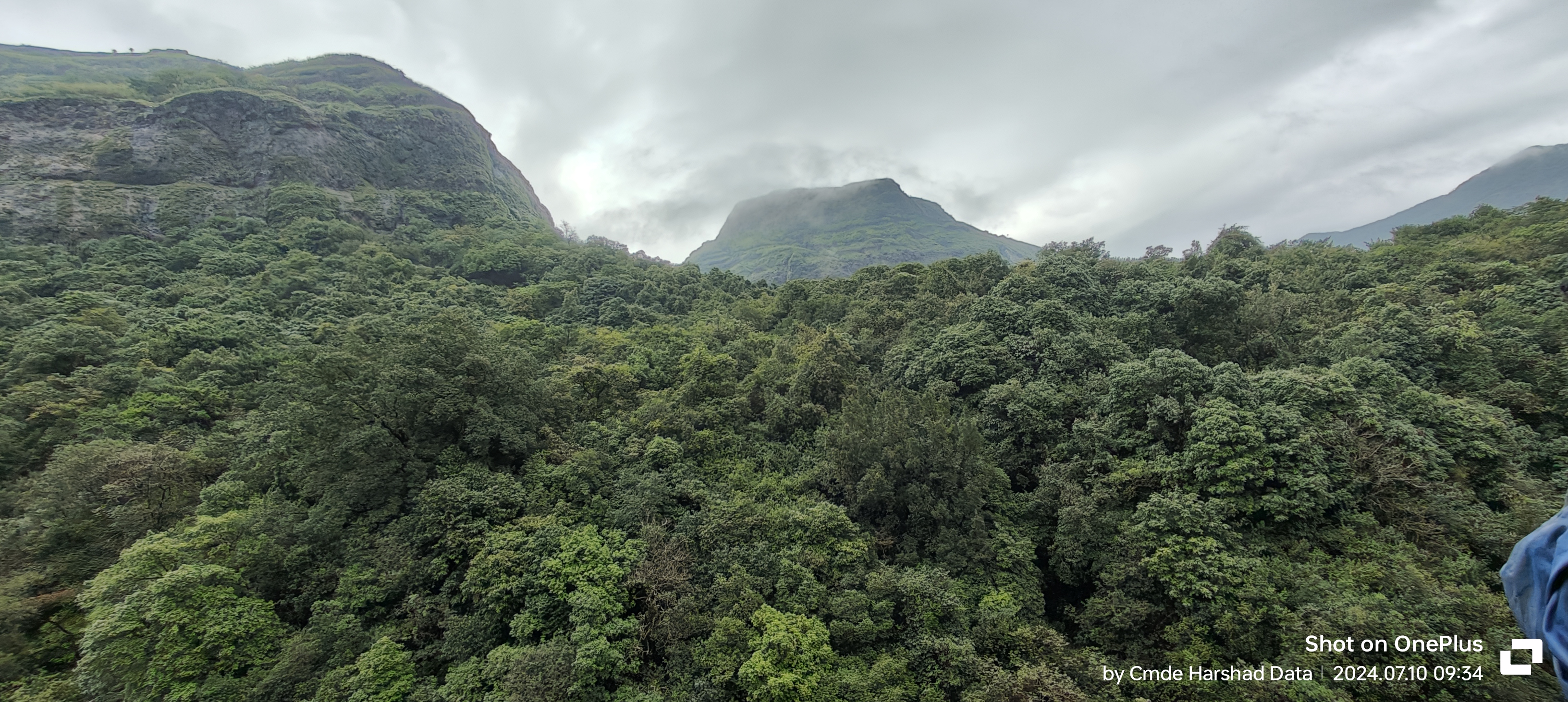
Andharban will mesmerize the trekkers. The trek has lush greens all around. The deep valley of Kundalika River is always with you, There are lots of waterfalls, small and big, some accessible and some on absolute vertical sheers of Sahyadri hills. The Music of flowing streams is yours to enjoy, Crossing fast-flowing streams will add to this adventure. Sometimes thick fog, rain clouds, mist or all three of them will accompany you. And rain? Andharban is a monsoon trek. Rain is the most essential element of this trek and in this season, if you don't get the rain, your trek is not counted as done😉😉😉.

When you Trek the Andharban, you are in Sudhagad Wild Life Sanctuary

Valley covered in Mist

The trail

Constant companions, Streams

It can really get dark (Dark = Andhar in Marathi) in this forest 

Waterfall and its downstream flow

Shivaling!

Clear View of Kundalika Valley and Bhire Backwaters

The Trail

Who can do it? 

Practically anyone who can walk about 12  to 13 km at a slow pace with adequate breaks can do this trek. Children and children within we adults will love this trek. But if I have to be precise, a child of 10 years till a not-so-old adult of 75 years, can certainly enjoy this trek.

Most people in this photo (Faces erased) are between 55 and 70

And when to Go?

Monsoon is THE season to have the best of everything. Waterfalls can be enjoyed till the end of October, otherwise for its natural beauty, this trek is a year-round trek.

Chalo Andharban!

Guys and Girls, what are you waiting for, let out the child inside you, have fun and have a good time. Heed the call of the great Andharban. 


Friday, January 27, 2023

Malhar Gad, Last and smallest fort built by Maratha Empire

 Malhar Gad

Situated just 30 kilometres from Pune, off Pune Saswad Road, Malhar Gad which is also called Sonori Fort because it is situated very close to Sonori Village, is a small yet beautiful fort close to Pune. It holds the distinction of being the last fort built by the Maratha Empire. This fort is accessible by car to one of its bastions and also by a trek starting at Sonori village, which can be accessed by car or a bus (from Saswad).

Grade of the Trek.

This trek is considered an easy trek suitable for children also.

How to Reach.

By Car - When one goes by car, following Google Map, after crossing Dive ghat. one goes through Kalewadi village and then up to the parking very close to the entry at the rear of the fort through the "Chor Darwaza". 


By Trek - If one wishes to trek by foot, the trek starts from the village Sonori village, a few more km down the road after crossing Dive Ghat beyond the turn for Kalewadi. Sonori village also has two more attractions, namely, Sardar Panse Wada with six watch towers (Mostly in a dilapidated state but it has got two temples worth visiting)  and Shri Krishna Temple. An easy trek over a ridge takes the trekkers to the fort. To reach the fort from here, one can climbe up to this fort along the ridge of the hill and thereafter moving along the side of the tower to the main gate of the fort.  One can climb up the fort along the ridge of the hill, and moving along the side of the Tower, we reach at the entrance door of the fort.

Note - I have followed the Kalewadi route. The information about Sonori route is researched on Internet.

About this Fort

Built in the year  1775 by Krishnaji Madhavrao Panse, Chief of Peshwa Artillery, this fort was meant to keep a watch on Dive Ghat as it was those days. Thorale (Elder) Madhav Rao Peshwa is said to have visited this fort. 

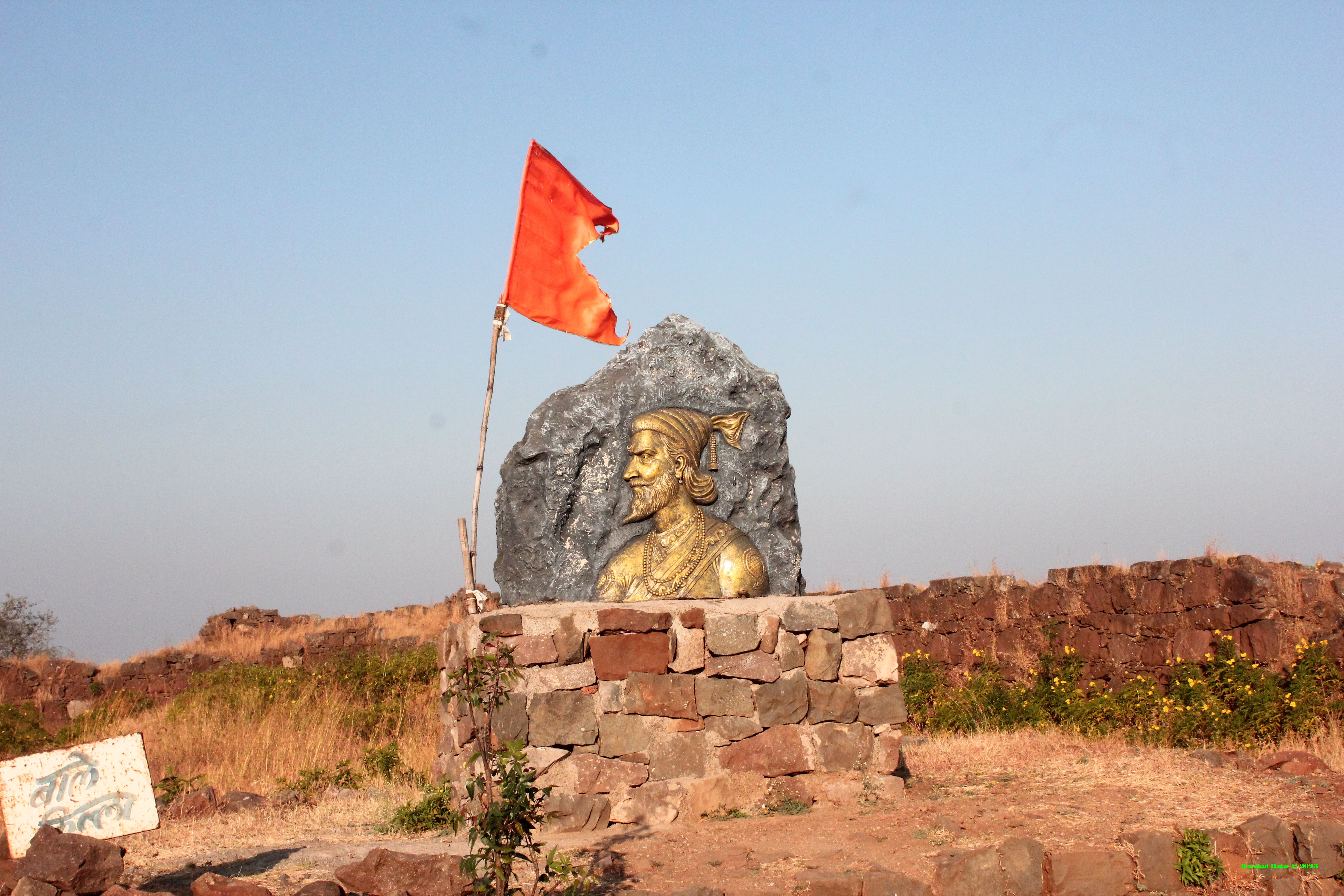
There are only a few structures on this fort including one well, one step well and two temples (in fairly good condition) dedicated to Lord Shiva and Lord Malhari Martand (Hence Malhargad). The Foundation of a Mahal also is visible within Bale Killa (Inner Fortification). A Chhatrapati Shivaji Maharaj Bust is carved on a rock in this Bale Killa.

Food and Water

Please carry your own food and water since these are not available on the fort. No natural shelters also exist there. Food and water are available on the Pune -  Saswad road.

Virtual Trip to Malhar Gad.

First Glimpse

Small Climb from Parking

Chor Darwaja (Secret Door)

View for a Gun Position

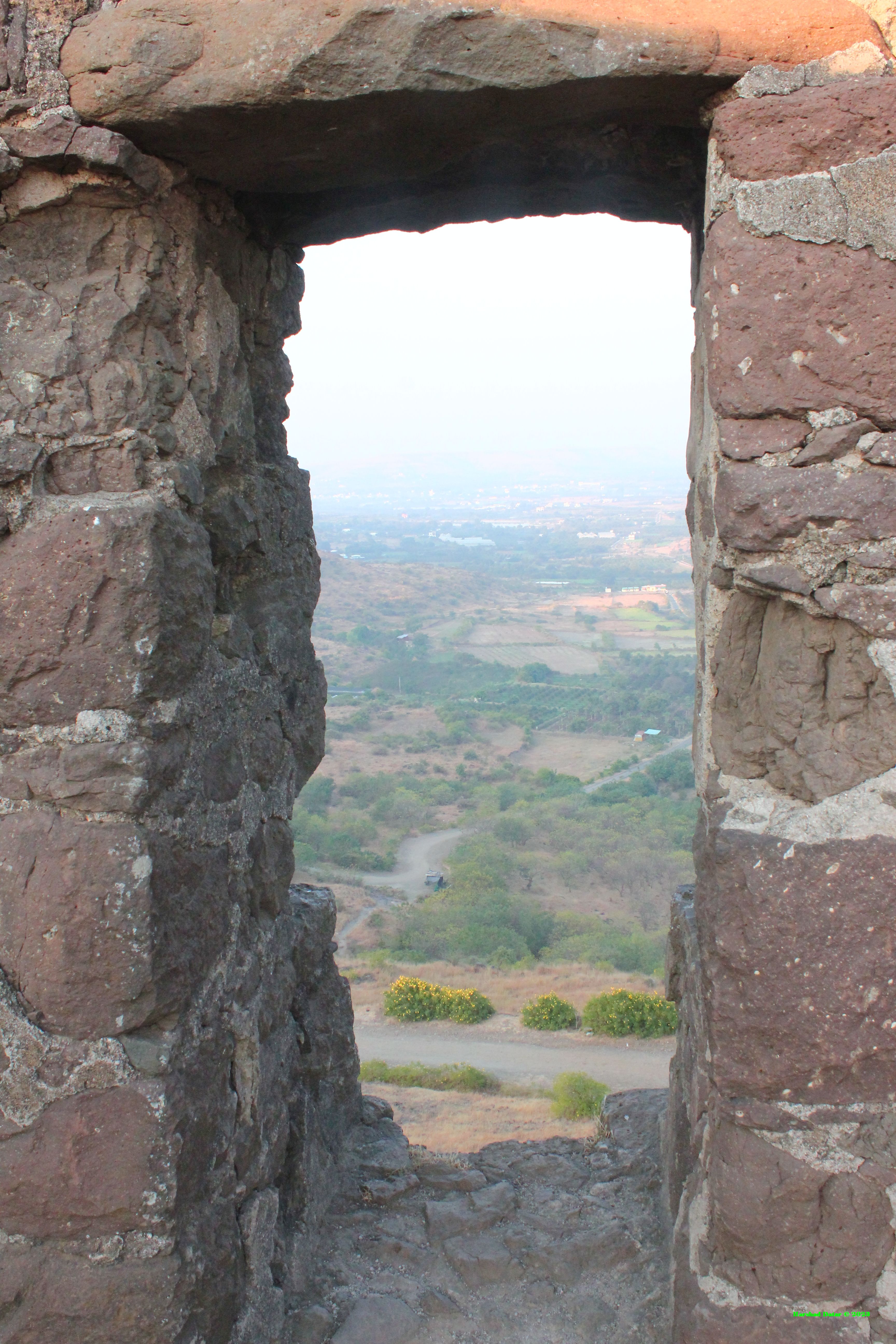
View from the fort

View from Malhargad
View of the winding road to the fort

Lone Sentinal
One of the Step Well inside


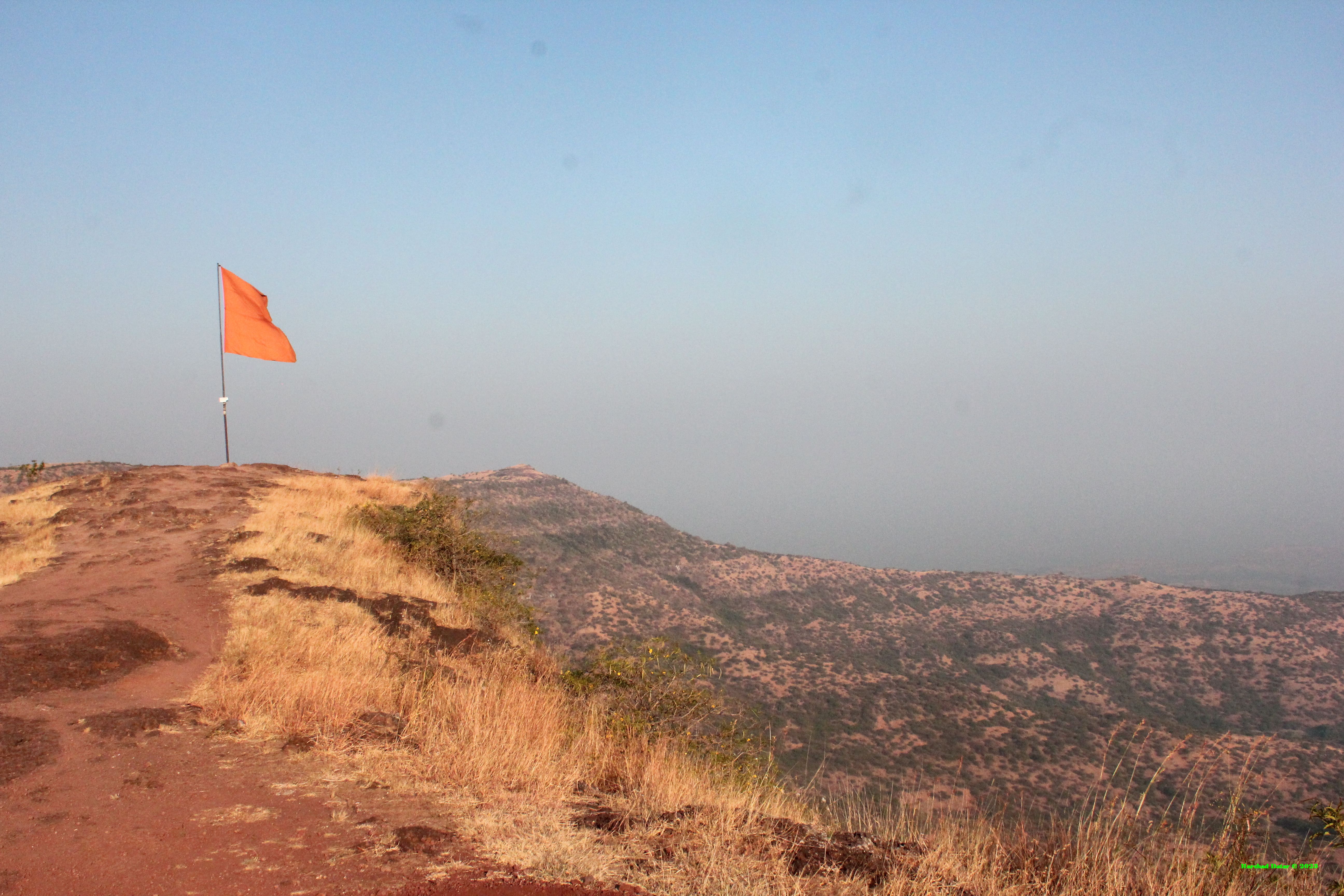
Saffron Flag on an Outcrop outside this fort, Photographed as if it is flag of Japan


Swarajya Dhwaj

Bust of Chatrapati Shivaji Maharaj on the fort

Door to Bale Killa, viewed from inside


Shri Malhari Martand Mandir

Another view

Deep Stambha (Lamp Post)


Mahadev Mandir

Bale Killa Door as seen from outside

Bale Killa Seen from the wall of the main fort


Two Bastions on either side of Mahadwar. See also the protective wall in front of the door

Protector Bastion of Maha Dwar

A well

Fort Wall

Bale Killa Bastion


Maha Dwar of Malhargad